
Utah's Statewide Search Fields
Utah County residents can start a warrant check with the free Utah Statewide Warrants Search. The Utah DPS Bureau of Criminal Identification explains how the name-based form works. You enter a first and last name. A middle initial is optional. Courts enter and clear the records themselves, and there is no fixed refresh schedule, so a search result can lag behind what a clerk sees. Treat any hit as a lead only. It may point you to the issuing court, yet it will not spell out every release term or settle a common-name mix-up. Compare the result with any citation, notice, or missed hearing you hold. Then call the court clerk with your case or warrant number. The BCI public search instructions lay out the form fields on the official page.
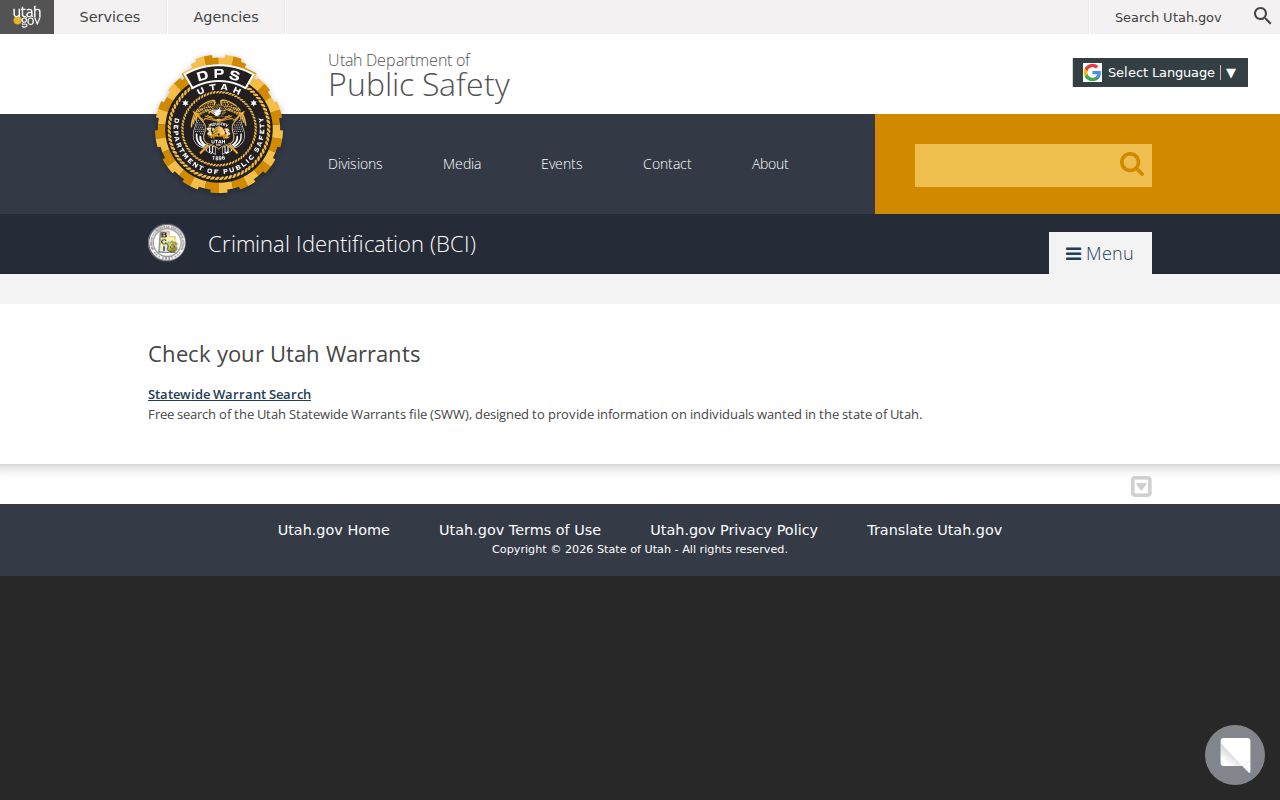
Check the live SWW form for current fields before searching.
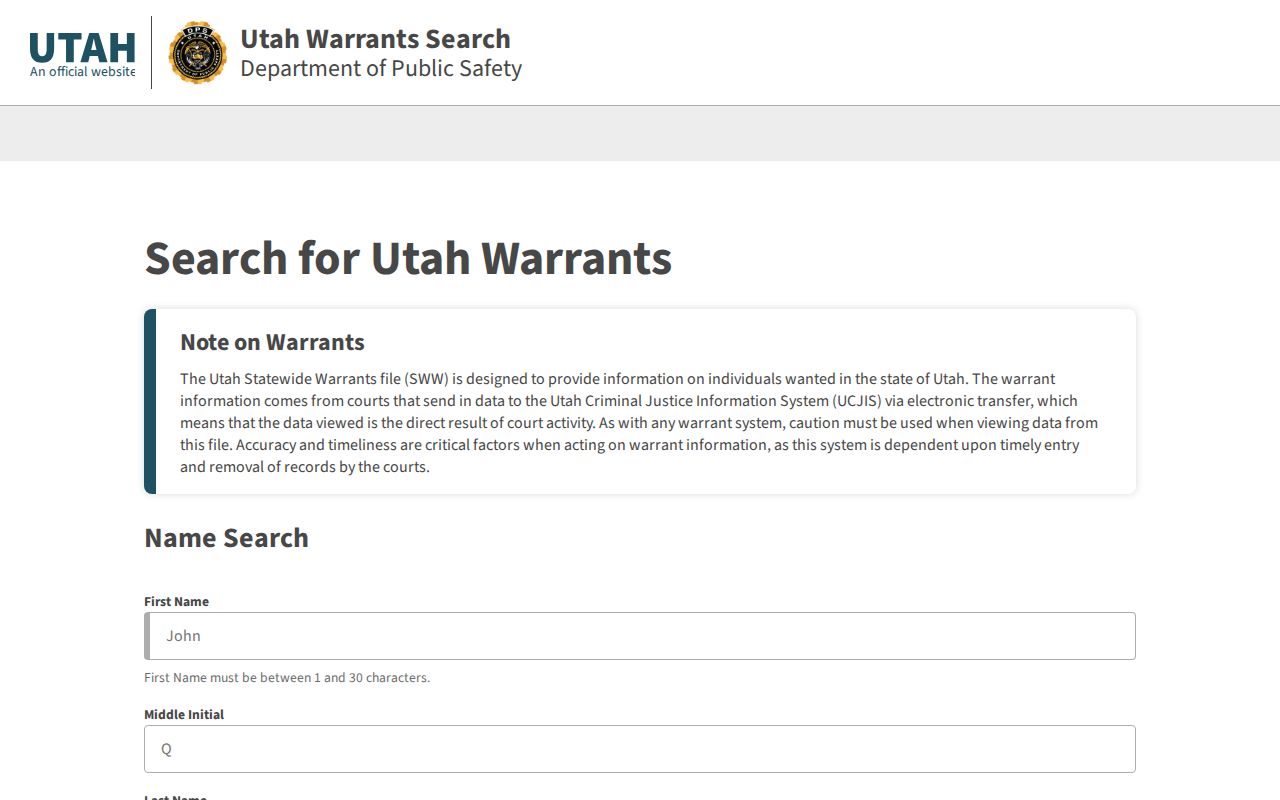
The public form is name based; authorized users have broader tools.
Checking for a Warrant in Utah County
Start with two steps. In Utah County, a notice, citation, or missed hearing points you to the statewide search plus the issuing clerk's case record. XChange shows public case history. MyCourtCase holds a party's own papers. The Sheriff answers countywide service questions, while each city clerk handles local resets and payments, so have your full name and any case, citation, or warrant number ready before you call.
- Search the official statewide warrant file by first and last name, adding a middle initial if useful.
- Compare any result with your court papers and note the court location and case number.
- Use Utah Courts XChange for a public case summary, or MyCourtCase for your own filed papers and balances.
- Call the court named in the record. For countywide warrant questions, call the Sheriff's Fugitive Investigations / Extraditions Team.
- If a county record is missing from public view, ask the relevant records office about a GRAMA request and the identification it needs.
Ask the Utah County court or clerk whether payment, an appearance, or a scheduled surrender changes both the warrant and the underlying case.
Why Provo and Spanish Fork Both Matter
County Justice Court and the Sheriff's Judicial Support Bureau work from the Health and Justice Building in Provo; the County Security Center and jail are in Spanish Fork. Warrant service and court payment use separate offices, so neither address is a universal warrant counter.
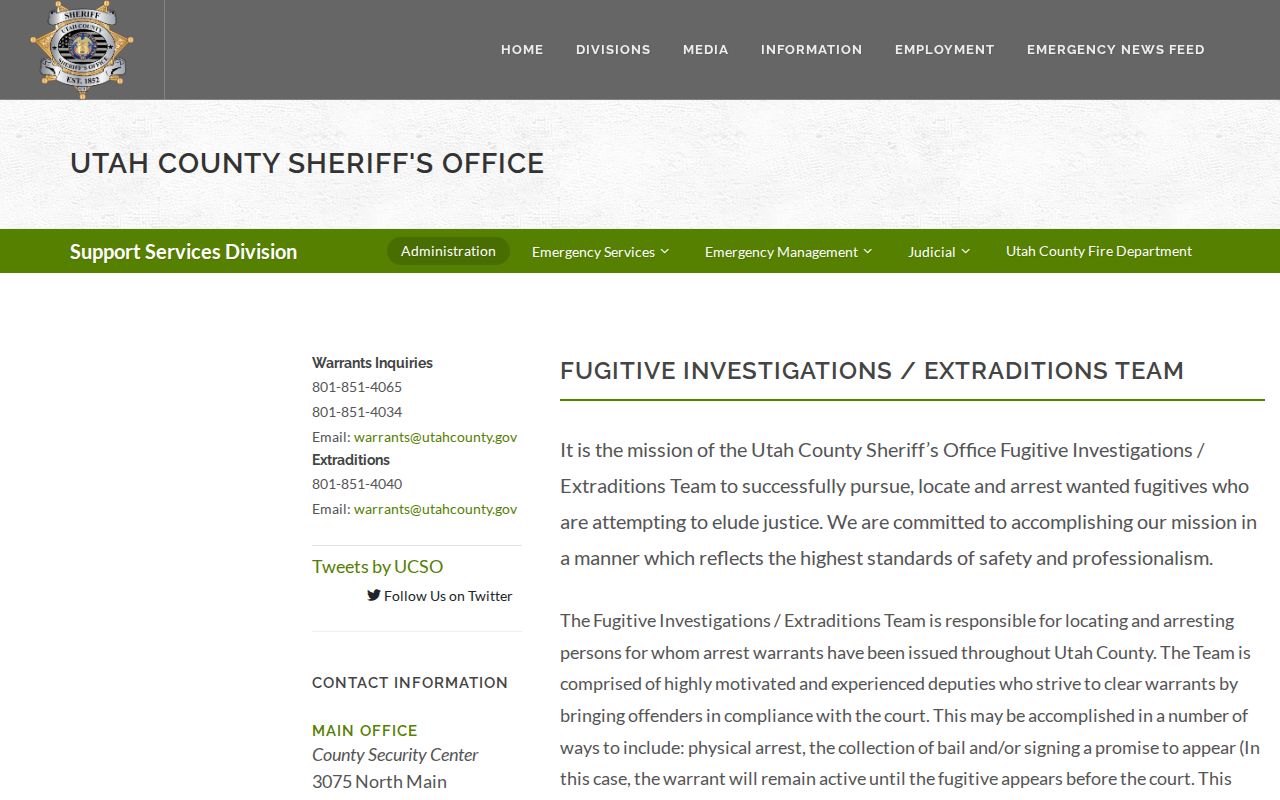
The Judicial Support Bureau lists warrant inquiries at 801-851-4065 and 801-851-4034, plus warrants@utahcounty.gov. See the county warrant unit page and call first; it does not promise a public walk-in surrender window.
The Sheriff's warrant unit page describes its countywide operation; the jail address does not identify the issuing court.
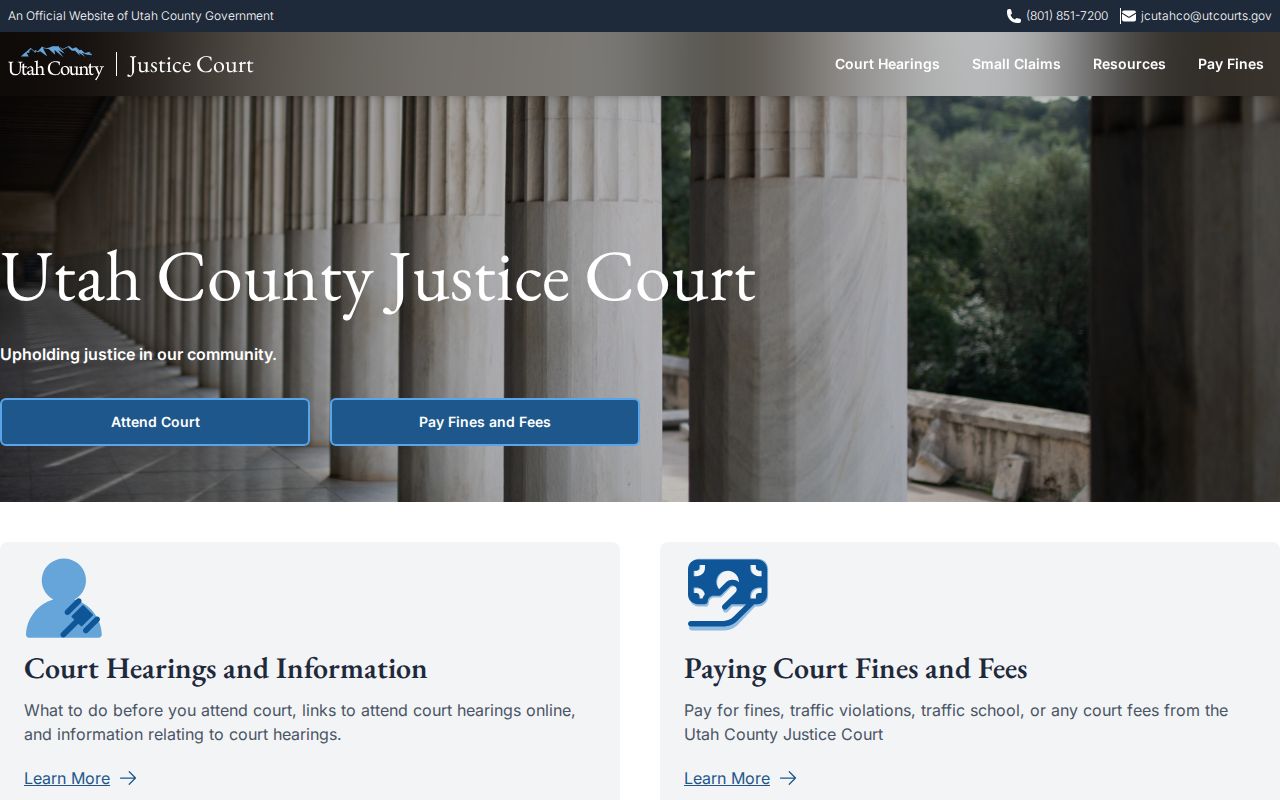
The Utah County Justice Court page explains county court service, which runs separately from sheriff warrant inquiries.
Confirm the named office's location and current visitor instructions before travel.
Utah County Warrant Types
Utah County arrest warrants follow probable-cause review. Bench and FTA warrants follow a missed court obligation. Traffic warrants often stem from a lower-court citation, while search warrants authorize a search or seizure and follow separate sealing rules.
| Record | How It Arises | Usual Court or Office |
|---|---|---|
| Arrest warrant | Judge finds probable cause and uses a warrant rather than a summons under the applicable rule. | Fourth District or the court with the criminal case |
| Bench / FTA warrant | A person misses a citation date, hearing, or required court step. | District, county Justice, or municipal Justice Court |
| Traffic warrant | Missed appearance or unpaid citation reaches the court's FTA process. | Issuing county or city Justice Court |
| Search warrant | A magistrate authorizes a particular search or seizure. | Issuing court; records may be sealed |
Utah County sources use the terms bench warrant, arrest warrant, and warrant for failure to appear. The Texas label capias pro fine does not apply. Ask the clerk what the status in your case means.
Court Data Can Lag
Timeliness is the catch with any statewide warrant search. Courts enter and remove records in the file themselves, and no nightly or weekly refresh is promised. A fresh bench warrant may take time to appear. A resolved one can linger until the court sends its update. Utah County's statewide search spans court levels, but that reach has limits. A city clerk still keeps the city's own file, and a quiet sheriff list does not prove a city or district court has no active case. The issuing court is the only place to confirm current status. The BCI manual explains how court entry and removal work. Its restricted UCJIS fields never appear on the public name form.
Inside a Utah County Warrant Record
A Utah County result may flag a case. It will not always show every release term, and it can include a case number, court, warrant type, reason, bond terms, or a status event. No single number format applies, so do not guess.
| Warrant / case number | Use the exact identifier shown in the official result or the court paper. No public number format was confirmed. |
|---|---|
| Issuing court | Identifies which clerk controls status, reset, payment, and release instructions. |
| Type or reason | May describe an arrest, bench, FTA, traffic, or other court process. |
| Release terms | Bond or appearance terms may require direct confirmation with the court. |
| Status | Outstanding data can lag. Served, returned, recalled, or quashed may appear in case history. |
Guard your personal identifiers. Share the exact case or warrant number only with the Utah County court or Sheriff staff handling it.
Pay Warrants Starts With Court Choice
Payment starts with court choice. The Sheriff's Pay Warrants form requires a case or warrant number, an amount, the issuing court, and a note. Its dropdown lists Utah County Justice Court, Fourth District locations, juvenile court, municipal courts, and OTHER. The form accepts payment details. It does not search for a warrant. It will not decide your case either. Check the amount, any service charge, the payment's effect, and any required appearance with the warrant team or the clerk before you submit, and never infer a bond from an unrelated traffic fine. Use the official Pay Warrants form only after the issuing office confirms the right court and amount.
Issuing and Serving Warrants in Utah County
Courts issue warrants and set terms. Peace officers serve them. Utah Rule of Criminal Procedure 6 allows statewide execution of an arrest warrant and requires the clerk to enter it. The Sheriff's Fugitive Investigations / Extraditions Team handles Utah County warrants and out-of-state felony extraditions. City police may also serve warrants. Clerk choice depends on the case. Use the Fourth District clerk for adult district cases, the Utah County Justice Court for county traffic and class B/C matters, or the named city clerk for municipal cases. The Sheriff answers countywide service questions but cannot replace an issuing court's decision.
Utah County Sheriff's Warrant Inquiries
County Security Center, 3075 North Main
Spanish Fork, UT 84660
801-851-4065 · 801-851-4034
Use the listed lines or warrants@utahcounty.gov for Utah County service questions. Ask the issuing clerk about a reset or recall.
Proving a Warrant Was Cleared
Paying a fine rarely ends the matter. The Utah County Sheriff says a deputy may accept a promise to appear at discretion, yet the warrant can stay active until the court appearance. So ask which event actually closes the order. Ask when the court sends its update to SWW. Keep the receipt or court order, and have the issuing clerk confirm the recall, service, or another status change. If the record still appears, give the case number plus your payment or hearing date. An online Utah County search alone proves no clearance. The Justice Court payment page lists online, phone, counter, mail, and drop-box options for eligible matters. East-side drop-box payments are credited the next business day.
If You Have a Warrant in Utah County
First, pin down the court and the warrant type. Then call the clerk or the Utah County Sheriff's warrant line before you travel. Ask about payment, judge approval, appearance rules, and surrender. The county posts no guaranteed walk-in surrender window. An attorney can discuss a voluntary appearance, release terms, or a motion to recall or quash; the court decides. Sheriff's staff may accept bail or a discretionary promise to appear, which can leave the warrant active until court.
Before traveling: Call first to confirm the office, case status, required documents, and whether an attorney or court appearance is needed.
For practical next steps, turn to the Utah County arrest warrant process when the record is an arrest warrant. Otherwise, ask the named court for direction.
No Amnesty Program Is Published
Utah County runs no amnesty week or roundup. No sheriff or city office publishes a safe-surrender event. Payment, judge-request, traffic-school, and deferred-prosecution options stay case specific, and some courts demand approval before payment. Verify the warrant with the court. Ask the Sheriff about service or county payment. The Most Wanted page is a selected public-safety list, not a substitute for SWW or a case-specific check.
Utah County Warrant Records and Public Access
GRAMA, Utah Code Title 63G, Chapter 2, governs Utah County agency records; court files follow Utah Judicial Administration Rules. Access limits differ for public, private, protected, sealed, and juvenile records. Rule 40 generally seals search-warrant applications at first. Use the Records Division page or the GRAMA portal. The Utah County Sheriff allows 10 business days except in extraordinary cases, requires photo ID before release, and asks notarized authorization for another person's records. No warrant-specific copy fee is posted.
Access rules: GRAMA covers public agency records; Rule 4-202.02 classifies court records; Rule 40 sets search-warrant sealing rules; juvenile access is limited by Utah Code §78A-6-209.
A GRAMA request never changes a court order in Utah County; take case decisions to the clerk.
A City Court Keeps Its Own File
The 2020 Census counted 659,399 Utah County residents. They live in cities from Alpine and Genola to Provo and Springville. Each municipal clerk sets local rules. A statewide result never turns a city case into a county Justice Court matter. County budget figures cite roughly 28,000 annual bookings and releases plus more than 200 cases handled daily. Those are operational numbers, not a warrant count. They show why the court and case number matter. Use the State Court Directory for current contacts, then start a city case with its named clerk.
Utah County Warrants by City
These five cities lead Utah County by 2020 Census population. Their Justice Courts handle local ordinance, traffic, infraction, and qualifying misdemeanor files, while the Fourth District takes felony and class A matters. No city posts a separate public warrant roster. Check the state file and call the named clerk.
Provo Warrant Search
115,162 residents; Provo Police and Provo City Justice Court handle distinct records.
Orem Warrant Search
98,129 residents; contact Orem City Justice Court about its defendant-only forms.
Lehi Warrant Search
75,907 residents; Lehi Police records and court status use separate channels.
Spanish Fork Warrant Search
42,602 residents; city legal and police offices sit apart from court records.
Springville Warrant Search
35,268 residents; use current court-directory details and confirm dated fee material.
Start with the Utah County warrant lookup for the full countywide record path. Then confirm with the issuing court.