
From Citation to FTA Warrant
Utah Rule 4B lets a judge issue a bench warrant after someone fails to appear as a criminal citation requires. That rule is the usual source of a Utah County traffic warrant. UCJA Rule 4-701 describes a notice and delinquency path in some cases, keyed to 14-day and 40-day milestones. Exact timing depends on the case type and the notice given. A missed date can also add court costs or bring a license consequence. Those are separate records, though. City courts layer on their own deadlines. Provo tells citation recipients to contact the court after five days, Orem gives 20 days before late fees, and Lehi warns that failure to respond or appear may cause a warrant and/or license suspension. So read the ticket. The court printed there controls the next step. Read the official Rule 4B text yourself, then ask the clerk which rules and deadlines apply to the specific citation.
Utah County Traffic Warrants Explained
Most Utah County traffic warrants are bench warrants or failure-to-appear warrants tied to an unpaid citation or a skipped hearing. The issuing court calls the shots. It decides whether payment is accepted, whether a judge must set a new date, and whether any warrant amount is due. A search result can find the court. It cannot decide whether the citation is payable. Utah County Justice Court takes county citations and cases from unincorporated areas. Provo, Orem, Lehi, Payson, Spanish Fork, Springville, and other cities each have their own Justice Court channels. Match the court to the record. If the record names a city, call that city's clerk rather than sending payment to the county on a guess.
County Citation Payment Channels
Utah County Justice Court's payment page asks for a case or citation number. No number handy? The court says to call 801-851-7200. From there the options spread out: the linked online service, phone payment at 385-276-3194 during weekday business hours, payment in person, check or money order by mail, or the after-hours drop box at the Health and Justice Building, which is credited the next business day. Cards carry a 2.5% convenience charge with at least $2.50, plus a 1.5% fee on foreign cards. One caution applies. The page is a payment route. It is not a full warrant search. Ask the clerk whether the listed balance lifts the warrant or only pays a fine, and whether a court appearance is still required. The county payment page lists every option and fee. Verify the case and the total charges with the clerk before you pay.
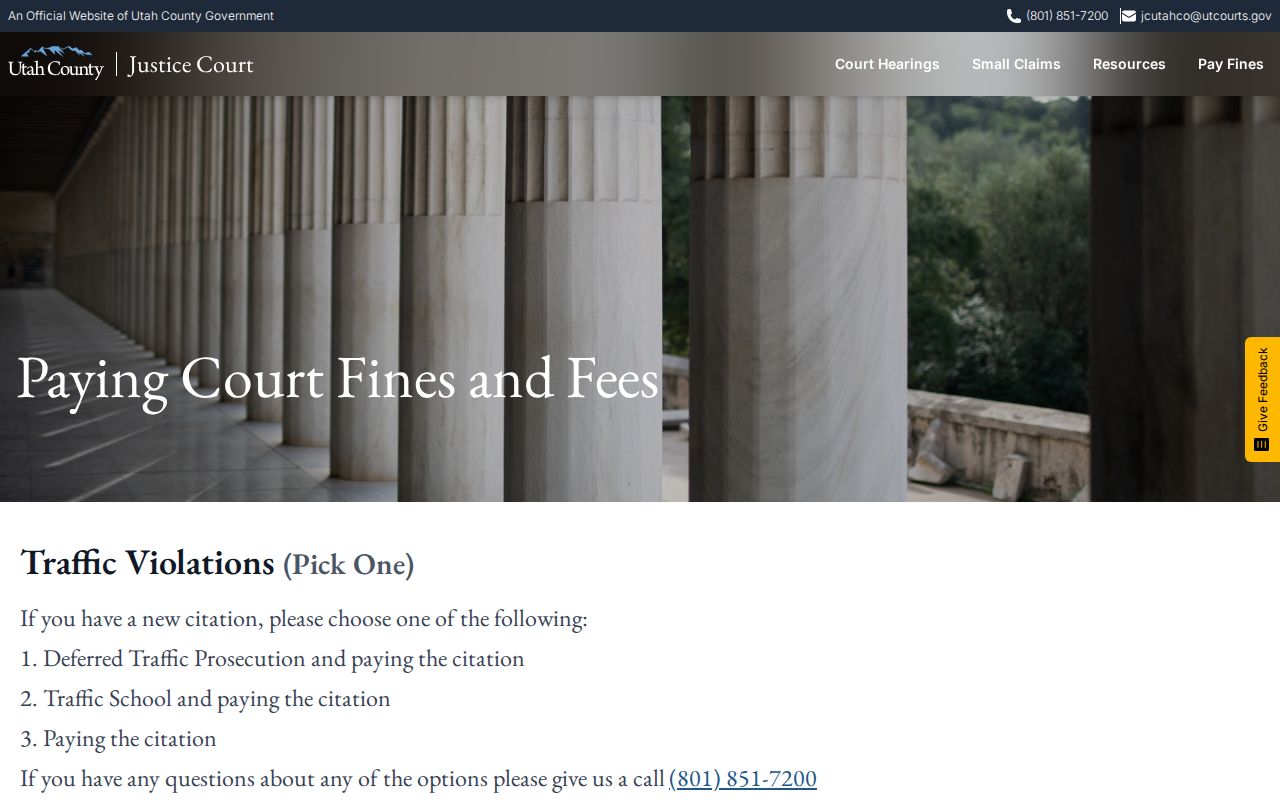
Use the official Utah County Justice Court payment page for current instructions.
Checking for a Traffic Warrant
A Utah County warrant check starts with the statewide warrant file. Search by name. Then bring the ticket or case number to the court. XChange may show public docket history, and MyCourtCase can show filings and balances to a party, but neither replaces the issuing clerk's answer on active status, a reinstatement amount, or a mandatory appearance.
- Find the court location on the citation, notice, SWW result, or XChange case.
- Call that court if the name search is blank, the case number is missing, or an online payment will not load.
- Ask if the case is payable, if a judge date is needed, and if traffic-school or deferred-prosecution approval must come first.
- Use the official court payment vendor only after the clerk confirms amount and payment effect.
- After payment or hearing, ask when the court updates SWW and whether DLD receives a separate clearance.
The Sheriff's line covers Utah County warrant service. It is a fallback only, and it cannot override a city court's authority over a city ticket.
Orem's Case Number and Traffic School
Orem's traffic-school form wants a nine-character case number in YYXXXXXXX format, plus the last name and an optional office code. Call the court before registering. The city allows five days for a citation to process and a 20-day contact window before late fees. Approval starts a 60-day clock to finish the class. That program is Orem's alone. Utah County runs no general warrant amnesty. The plea information carries a sharper warning. A delinquent citation or an issued warrant can mean denial or enhancement fees. Anyone contesting a ticket must appear in person to sign a promise to appear. Call 801-724-3900 before choosing a plea, payment, or class option when a warrant may be active.
Inside a Traffic Warrant Record
A citation and its warrant can share one case trail. The tools do not agree on identifiers. The county payment page takes a case or citation number, while Orem's traffic-school form wants the nine-character court case number, not the citation. Utah County publishes no public warrant-number format.
| Case / citation | Use the number from the ticket or court; the correct field depends on the portal. |
|---|---|
| Issuing court | County or city Justice Court that controls the traffic case. |
| FTA event | May show a missed appearance or failure to respond. |
| Balance | May be a fine, fee, reinstatement sum, or bond. Confirm the kind. |
| License report | DLD suspension or reinstatement is separate from warrant status. |
Bring both case and citation numbers when calling if you have them.
Payson Online Payment Limits
Payson Justice Court's payment page asks for a citation or case number, but a mandatory-appearance matter may not show up for online payment. So ask before you click. The city warns readers not to pay before asking about traffic-school or deferred-prosecution options. Its Justice Court holds hearings by appointment on Wednesdays. Remote-hearing instructions sit on the official page. A blank result proves nothing. It does not show whether a ticket or warrant exists. Call 801-465-5210 and ask whether a clerk must enter the case or the judge must approve a date. Was the ticket written elsewhere in Utah County? Then Payson's process does not apply. The Payson payment instructions and Justice Court page lay out the city's official steps, so confirm the right route with the court first.
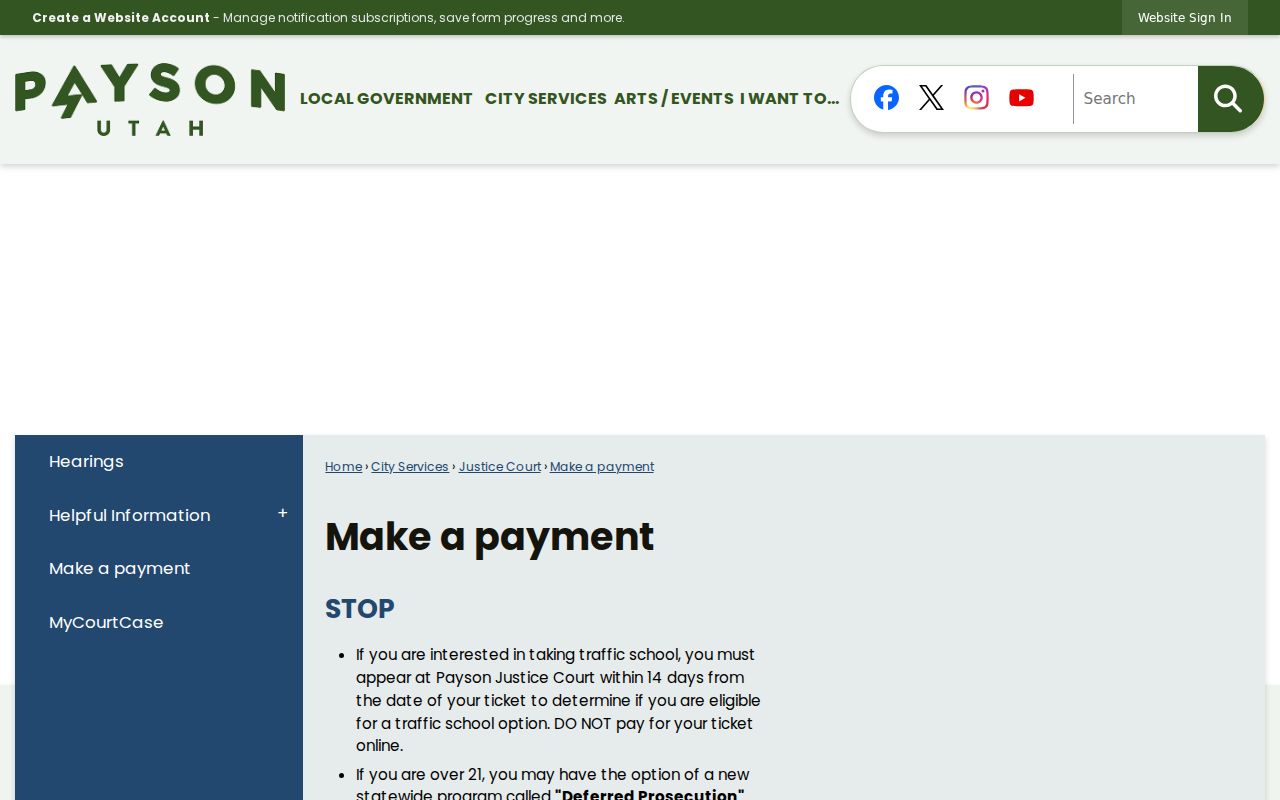
See Payson payment instructions and its Justice Court page.
How to Pay or Lift a Traffic Warrant
Start with the clerk. Ask whether the traffic case can simply be paid, needs a hearing, or takes a judge's approval. If payment is allowed, use the exact case or citation number and hold on to the receipt. Utah County gives you choices for eligible county matters: phone, mail, in-person, online, and a drop box. The Sheriff keeps a separate Pay Warrants form. That form wants a confirmed amount and the correct court selected. Never guess a bond from a traffic fine or pay an old schedule amount. The Sheriff adds a service fee, and Utah County publishes no universal warrant bond schedule. Some city programs want an application before payment. Afterward, confirm the warrant was recalled or updated and that no appearance is still owed.
Ask the court what the payment satisfies. A fine receipt alone may not show that a warrant was cleared or a case was closed.
Utah County's Sheriff Pay Warrants form page walks through paying a confirmed warrant amount to the correct court.
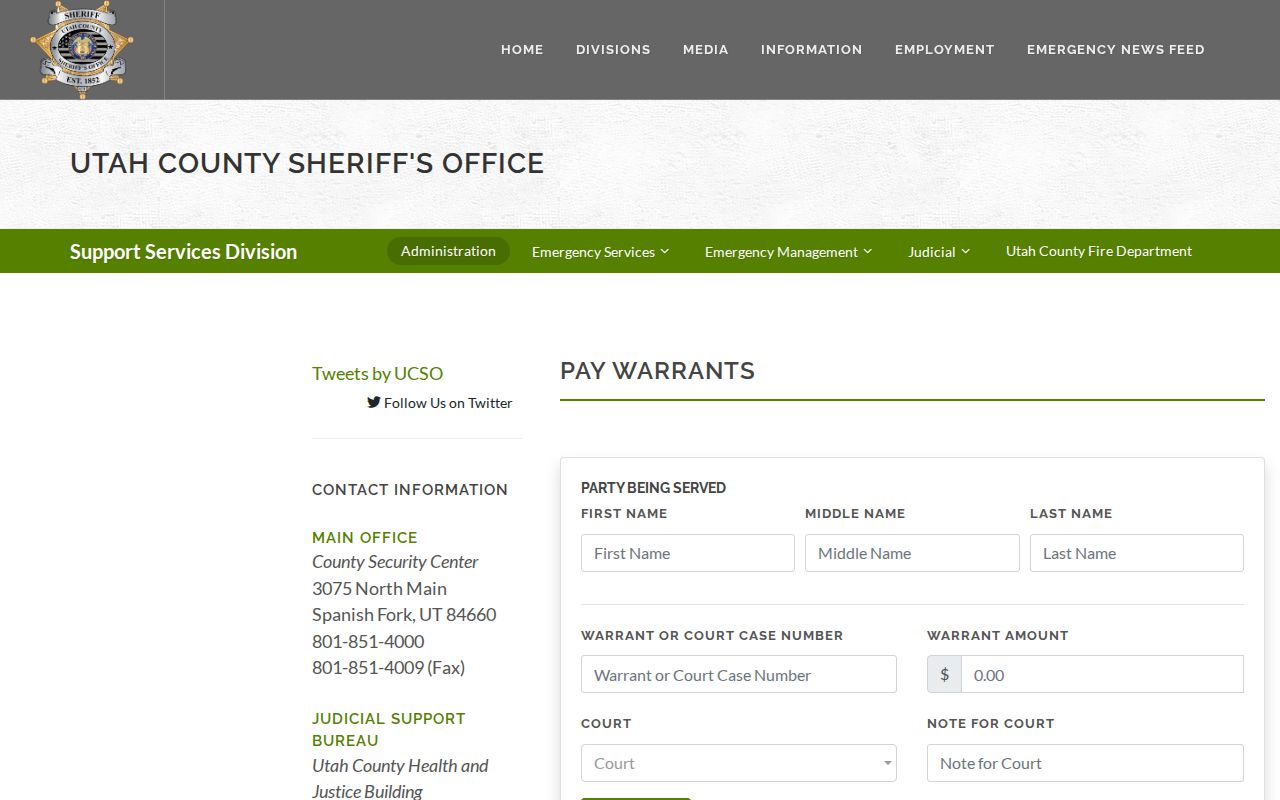
Check with the issuing clerk first, since the Sheriff payment route may not fit every Utah County traffic case.
What Payment Does Not Finish
Paying a fine does not always close the case. A Utah County warrant can stay active until the court sees an appearance, a signed promise, or a judge's order. The Sheriff's promise-to-appear option is discretionary. It can leave the warrant live until court. Ask the clerk what update to expect and when to check again. Keep proof of payment or the court order, too. Then verify the status with the issuing court, ask whether any license clearance was reported, and remember that a driver-license check is not a warrant search.
Traffic Warrants, FTA, and License Holds
Utah Code §53-3-221 lets the Driver License Division act in qualifying citation, failure-to-appear, or court-reported warrant situations. The exact subsection and case type matter. A Utah County warrant is a court record, while a license suspension is a separate DLD record with its own clearance step.
| Issue | Record Holder | What to Confirm |
|---|---|---|
| FTA or traffic warrant | Issuing Justice Court | Active status, payment, reset, or appearance terms |
| License suspension | Utah Driver License Division | Whether court satisfaction reached DLD and status changed |
| County service | Utah County Sheriff | Service, surrender, or warrant payment instructions |
Fix the case with its court first. Then, if a license problem remains in Utah County, check with DLD, since the rule does not say every unpaid amount causes a suspension.