
Utah's First and Last Name Form
Utah's statewide warrant search is where most Utah County lookups begin. Courts across Utah feed it their warrant entries. The form asks for a first and last name, plus an optional one-character middle initial. Its live endpoint has been unreachable, so check whether the current page adds a CAPTCHA or changes the field labels. It is a name lookup only. No dedicated Utah County list sits behind it. Spell the name the way the court notice or citation does. Have a middle name or a variant? Ask the clerk how to search the case rather than guessing at a match from a common name. A public result may also leave out some release terms and personal identifiers. The Utah DPS BCI warrant-search page links to the statewide search and explains its public use, and the county sheriff points people there too.
Searching for a Warrant in Utah County
Utah County's warrant check runs in a chain. Search the statewide file first. Identify the court next, then confirm current status with that court's clerk, or with the sheriff for countywide service questions. The Fourth District Court handles felony and class A criminal cases. Utah County Justice Court covers county infractions, traffic, and class B/C matters. A municipal Justice Court keeps its own city cases.
- Enter first and last name in the public SWW search; use a middle initial if it may help narrow results.
- Record the court location and case or warrant number shown in a possible match.
- Search the public case record in XChange to review available hearings and docket history.
- Call the named court for active status, payment amount, release terms, reset options, and any appearance requirement.
- Call the Sheriff's warrant team at 801-851-4065 or 801-851-4034 if the question concerns county service or the correct office.
Want a formal agency record? Send a narrow GRAMA request once you know which office holds it. A request does not change a warrant.
BCI's Court-Fed Updates
The statewide warrant file draws straight from court activity. The BCI manual puts it plainly. Accurate, timely results depend on courts entering new warrants and removing resolved records. No public schedule promises nightly, weekly, or monthly refreshes. Results can lag in either direction, especially after a recent Utah County hearing or payment. Treat a blank result with care. "No result" is not the same as "no warrant." Never act on a name match alone, because only the court can confirm identity and status. When a Utah County result looks old, call the court with its number and the date you checked. The clerk can tell you whether an order is still active. The clerk can also say whether an update is pending. The statewide index is good for finding a court. The court order stays the control point. Authorized UCJIS users get deeper query modes, with case, warrant, index, license, and vehicle fields documented in the BCI manual. Those fields are not public, and no Utah County lookup exposes them.
Warrant Search Fields Explained
The public SWW fields are few. Don't assume the live form takes a court case number just because a law-enforcement query can. If you need a direct number search, call the Utah County sheriff or the court. Ask which record system can locate it.
| Field Label | Type | Required | Notes |
|---|---|---|---|
| First Name | Text | Yes | Enter the name as it appears on court papers. |
| Last Name | Text | Yes | Check spelling and known name changes with the clerk. |
| Middle Initial | Text | No | Optional, one character; may help with a common name. |
| CAPTCHA | Challenge | Current behavior not confirmed | The research browser could not load the live endpoint. |
| Search | Button | Yes | Runs a public name query in the SWW file. |
The field list comes from an official county-hosted interface description and BCI materials. Labels can change. Check the live Utah County form before trusting an exact one.
A Case Layer After SWW
XChange adds a public court-case layer for Utah County, not a full warrant portal. Guests can search case information. Some services need an account or paid subscription. A court summary may show the case number, hearing events, and filings. That helps identify the issuing court. Only the clerk can confirm an active warrant. MyCourtCase serves a different purpose. It is a free account for a party to a case, and it asks for an email, case number, and government ID. A party can view case history, filed papers, hearings, and balances there. Searching for a relative by name? Use public court channels and ask the clerk about proper authorization. The XChange access page explains the public routes into court records, and MyCourtCase covers party access.
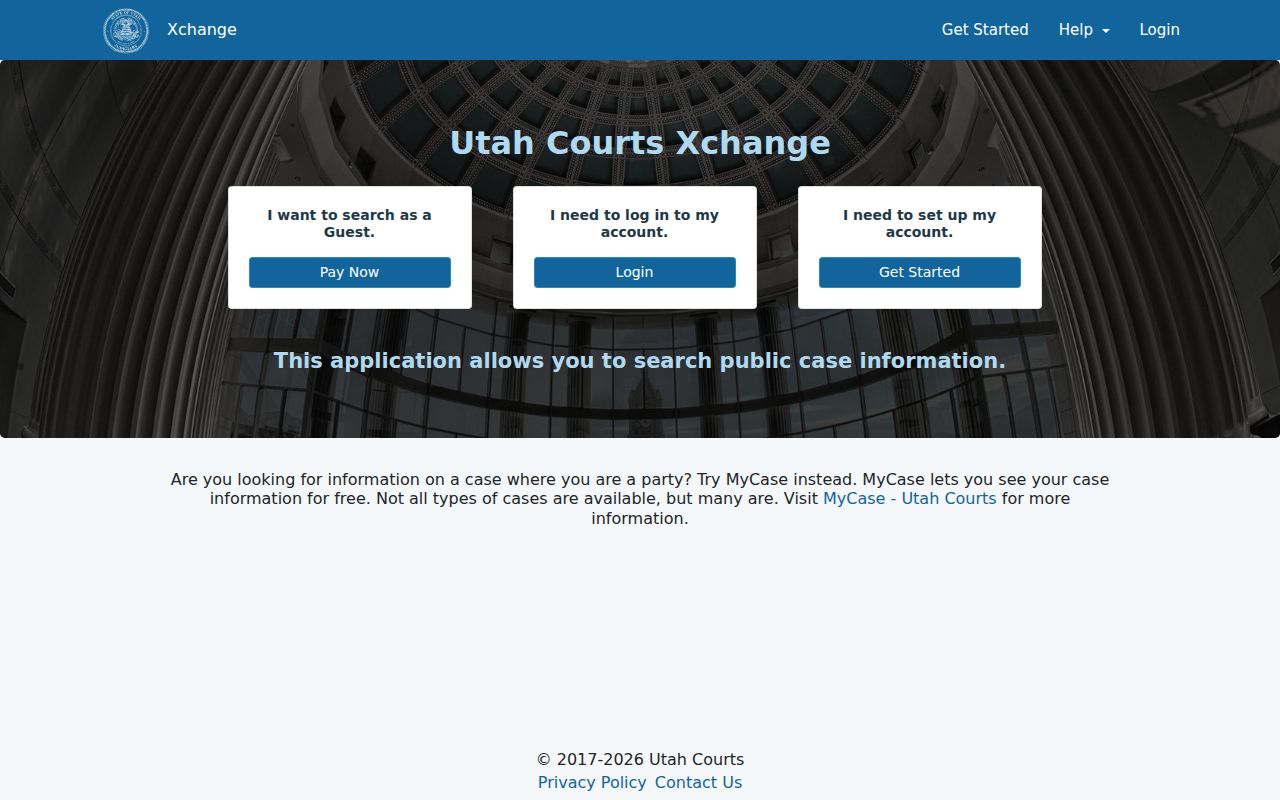
Use the official XChange portal to begin a public case search.
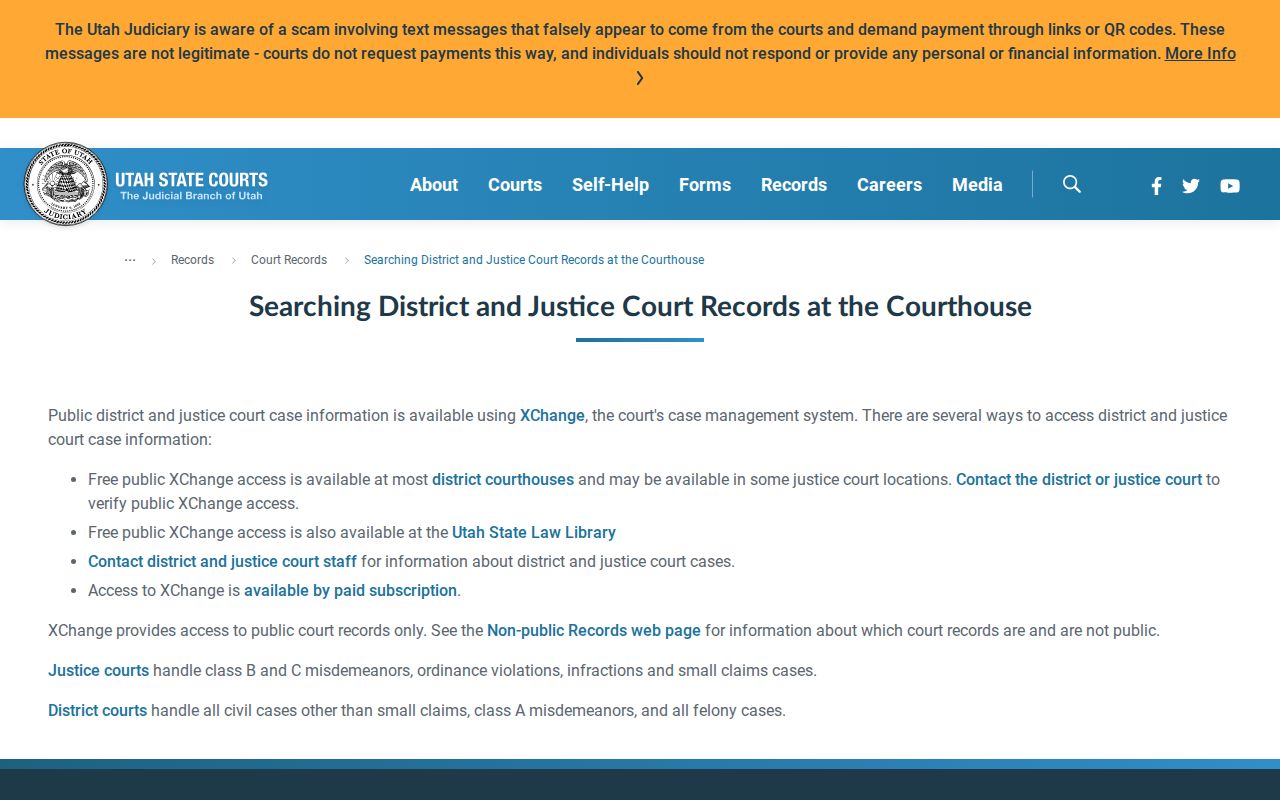
MyCourtCase can add party-only context, but the Utah County court's own warrant confirmation still governs.
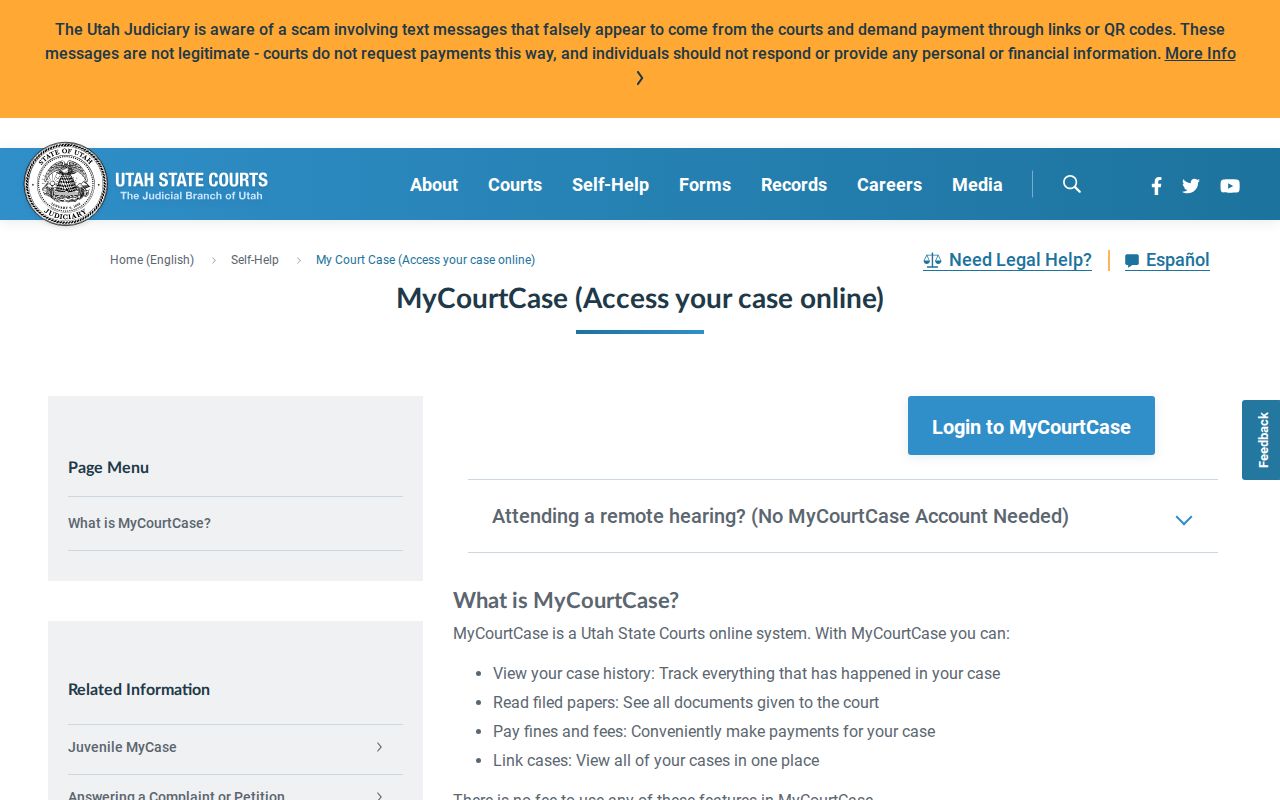
Use MyCourtCase only for a case where you are a party.
What a Warrant Search Shows
A search result can point you to the right court. It is not always a full warrant packet. The sample schema from BCI and Utah Courts includes identifiers, court and case details, warrant type or reason, release terms when available, and status events. The public layout varies. A Utah County match still needs the court's confirmation.
| Warrant number | No public format confirmed Ask the clerk for the exact identifier. |
|---|---|
| Case and court | The number and court location help route a question to the right clerk. |
| Type and reason | May identify arrest, bench, FTA, traffic, or another process. |
| Bond or release | Confirm amounts, appearance terms, and payment effect directly. |
| Status event | Public labels can vary; a recent update may not yet reach SWW. |
Don't copy or post another person's identifying details. If the possible match is yours, give the official Utah County office its number and ask for confirmation.
When GRAMA Adds a Records Route
Sheriff records and court case files answer different questions in Utah County. The Sheriff's Records Division handles agency records through the county NextRequest portal. Describe the records you want in detail. Utah County allows 10 business days unless circumstances are extraordinary, and it asks for photo ID before release. A request on another person's behalf needs notarized authorization. Reports start at $15, and the posted schedule names no separate warrant copy fee. The County NextRequest form opens the request, and the Sheriff Records Division page lays out the division's rules. GRAMA can surface an agency record. For current warrant status, though, the sheriff's warrant line or the clerk answers faster.
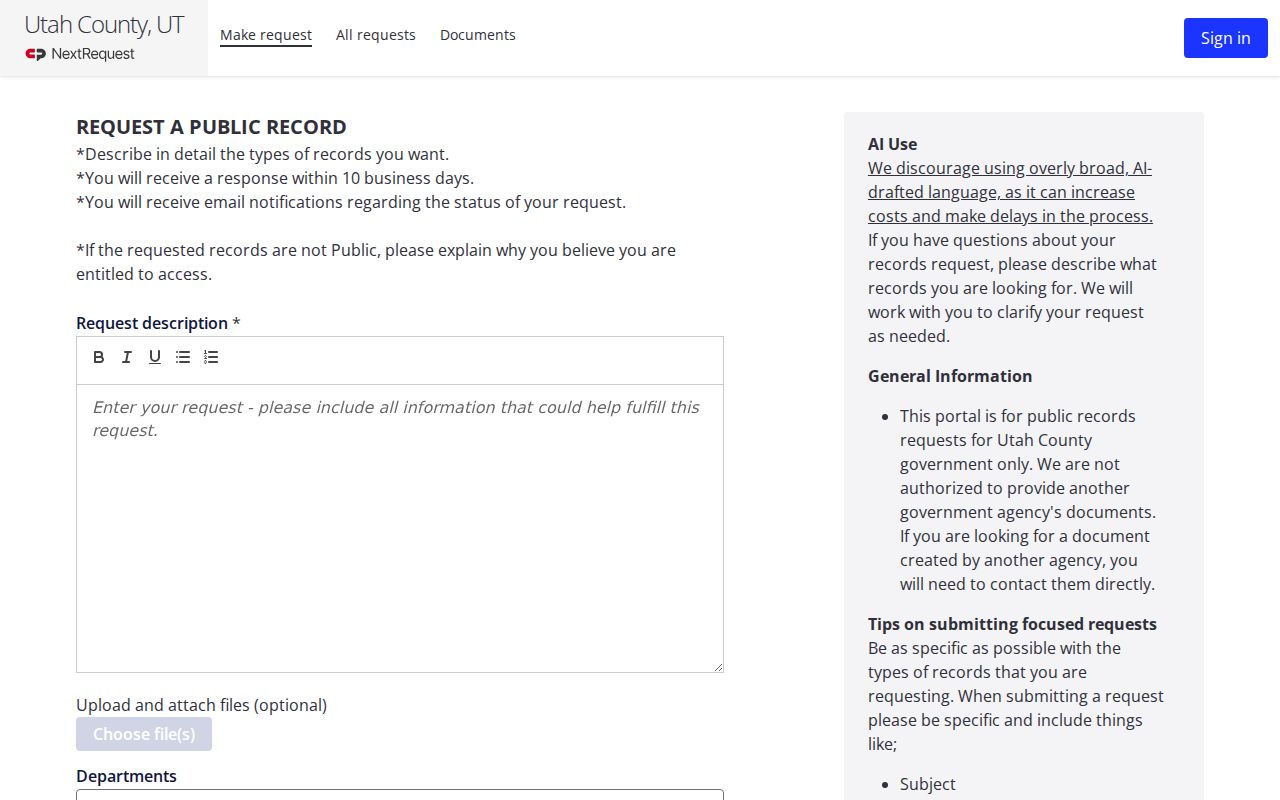
The Sheriff Records Division instructions are shown here with its public-record request route.
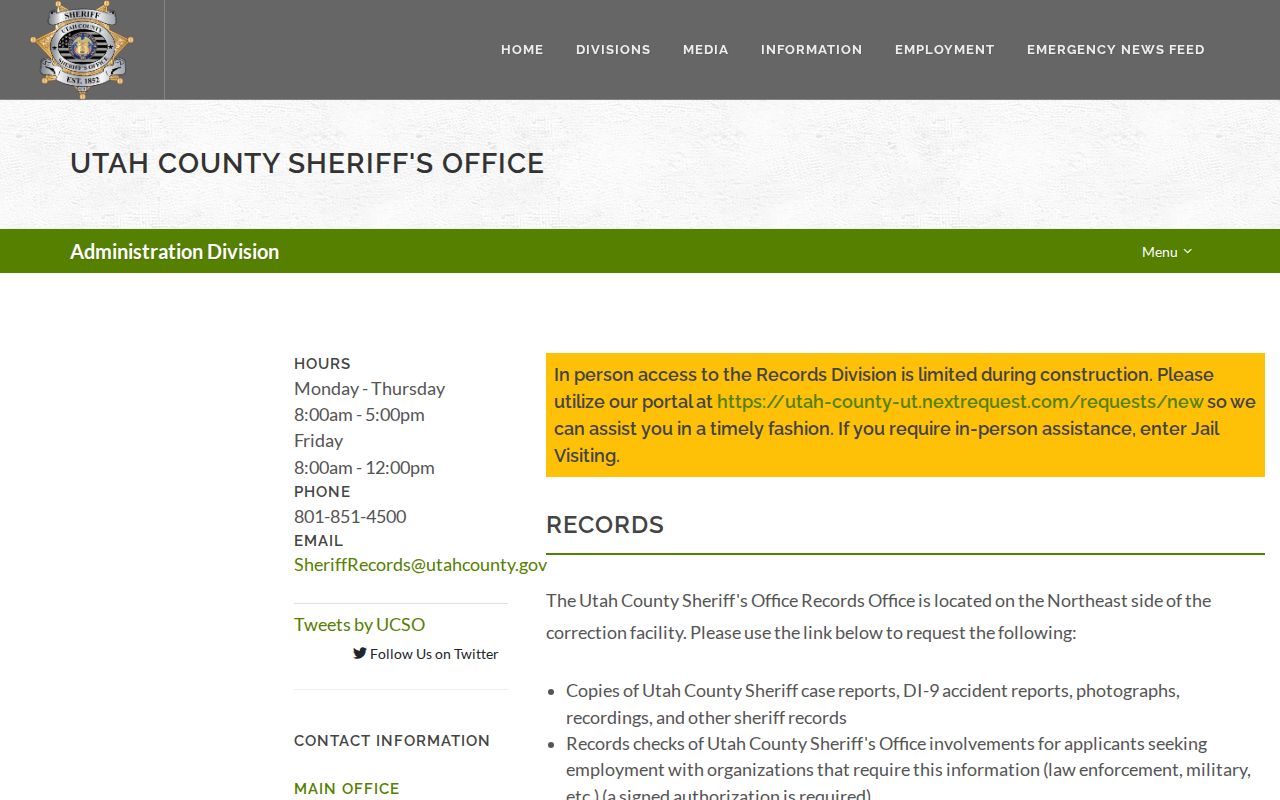
The Sheriff's Records Division gives current ID, timing, and fee instructions.
Where to Check Warrants in Utah County
Utah County offers several routes, and each answers a different question. The statewide search is the broad public start. Take a Fourth District criminal file to the District Court clerk. A county traffic or lower-level case belongs to Utah County Justice Court. City citations go to the municipal clerk of that city. Questions about countywide warrant service? The Sheriff's Fugitive Investigations / Extraditions Team takes those by phone or email. A known case number opens more doors. Court records sit in XChange or a public courthouse terminal, which Utah Courts describes. MyCourtCase covers a party's own filings through a separate login. If you cannot tell which court issued a warrant, give the case number to the state directory or the sheriff line and ask for the right clerk. Utah County's Justice Court hearing page links to case records and explains contact and hearing options. City details vary, so rely on the current State Court Directory rather than assuming each city uses the county payment counter.
Why a No-Hit Needs a Call
A blank search proves little. It may reflect a delayed update, another court, a restricted record, or a name variation. No search result is a clearance letter. If a citation or missed hearing hints at a bench warrant, call the issuing clerk even when SWW shows nothing. For countywide service in Utah County, call 801-851-4065 or 801-851-4034, or email warrants@utahcounty.gov. Confirm jurisdiction and status there; a payment form is not a warrant lookup.
Restricted Warrants and Access Rules
Public access in Utah turns on how a record is classified. Juvenile files are not treated like adult criminal records. Utah Courts splits records into public, private, protected, and sealed. Utah County cases follow those state rules. Search warrant applications and related papers stay sealed at first under Rule 40, and a judge can keep them sealed for a legal reason.
Key access rules: GRAMA covers public agency records; Rule 4-202.02 sets court-record classes; Rule 40 covers sealed search warrants; juvenile limits appear in Utah Code §78A-6-209.
Ask the clerk which access rule governs the Utah County case. A records request can seek eligible agency material, but it cannot unseal a court file or change an order.